
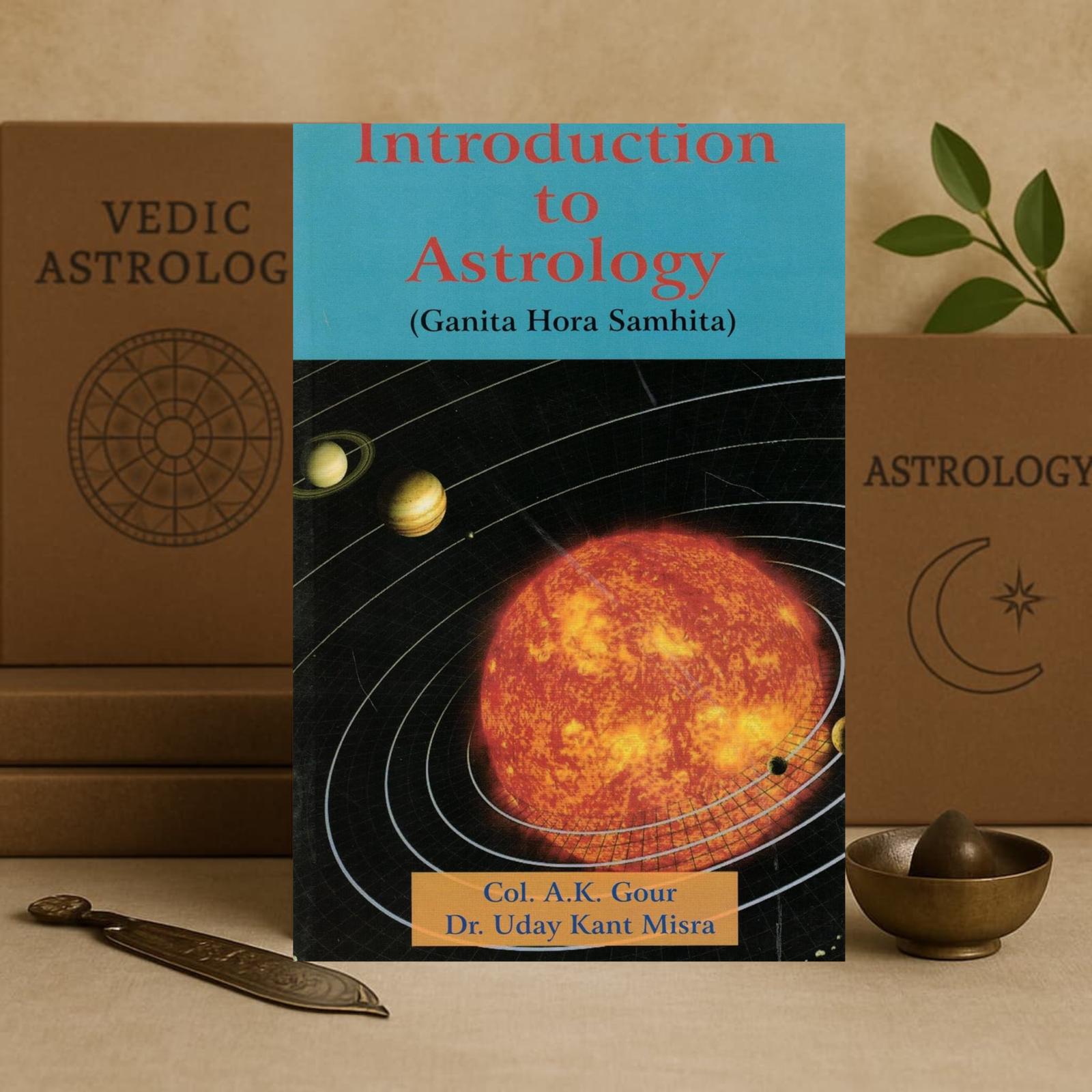
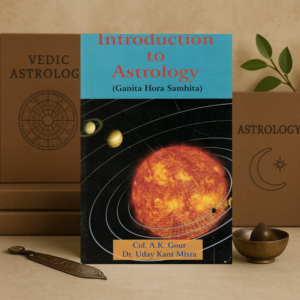
Introduction to Astrology (Ganita Hora Samhita) is one of the most respected introductory books for students beginning the study of Vedic Astrology (Jyotisha Shastra). Written by renowned astrology scholars Col. A.K. Gour and Dr. Uday Kant Misra, the book presents a systematic and balanced introduction to the traditional structure of Indian astrology.
Unlike books that focus only on horoscope interpretation, this work introduces readers to the complete framework of Jyotisha by explaining its three classical branches:
- Ganita – Mathematical and Astronomical Astrology
- Hora – Natal and Predictive Astrology
- Samhita – Mundane Astrology and Collective Predictions
The authors combine traditional concepts with logical explanations, making the subject accessible to modern readers while preserving the classical foundations of Vedic astrology.
Why This Book is Important
Classical Indian astrology considers Ganita, Hora, and Samhita as the three pillars of Jyotisha. Without understanding astronomical calculations, horoscope construction, planetary movements, and the philosophical principles behind astrology, predictive interpretation remains incomplete.
This book explains these foundations in a structured manner, helping readers understand:
- What Jyotisha is
- Its historical development
- The role of astrology in Indian knowledge traditions
- The relationship between astronomy and astrology
- Practical horoscope preparation
- The importance of Panchanga
- Karma, destiny, and free will in astrological interpretation
Its educational approach has made it a recommended reference for students of Vedic astrology and several structured astrology learning programs.
Key Features
- Comprehensive introduction to Vedic Astrology.
- Covers all three branches—Ganita, Hora, and Samhita.
- Clear explanation of astrology’s philosophical foundations.
- Historical overview of Indian astrology.
- Detailed introduction to planets, zodiac signs, and constellations.
- Panchanga explained in a simple manner.
- Modern and traditional horoscope casting methods.
- Discussion on Karma Theory, Fate, and Free Will.
- Easy-to-understand English language.
- Suitable for beginners as well as intermediate learners.
- Frequently recommended for structured astrology education.
Topics Covered
The book broadly includes discussions on:
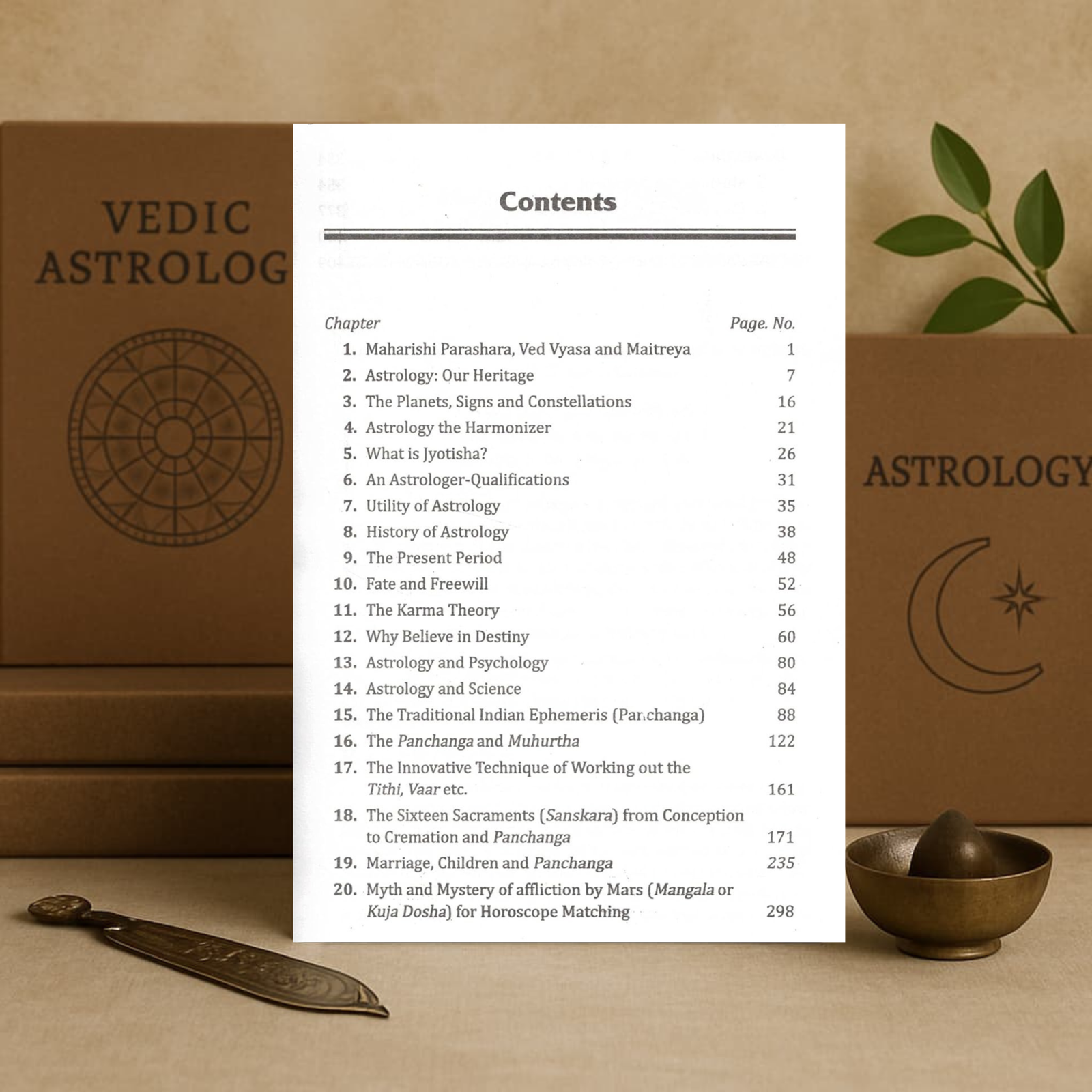
- Introduction to Astrology
- Heritage of Jyotisha
- Meaning and Scope of Astrology
- The Three Branches of Jyotisha
- Zodiac Signs
- Planets
- Nakshatras
- Panchanga
- Horoscope Casting
- Traditional Horoscope Preparation
- Modern Horoscope Calculation
- Qualifications of an Astrologer
- Utility of Astrology
- Karma Theory
- Fate and Free Will
- Astrology and Psychology
- Astrology and Science
- Astro-Meteorology
- Historical Development of Indian Astrology
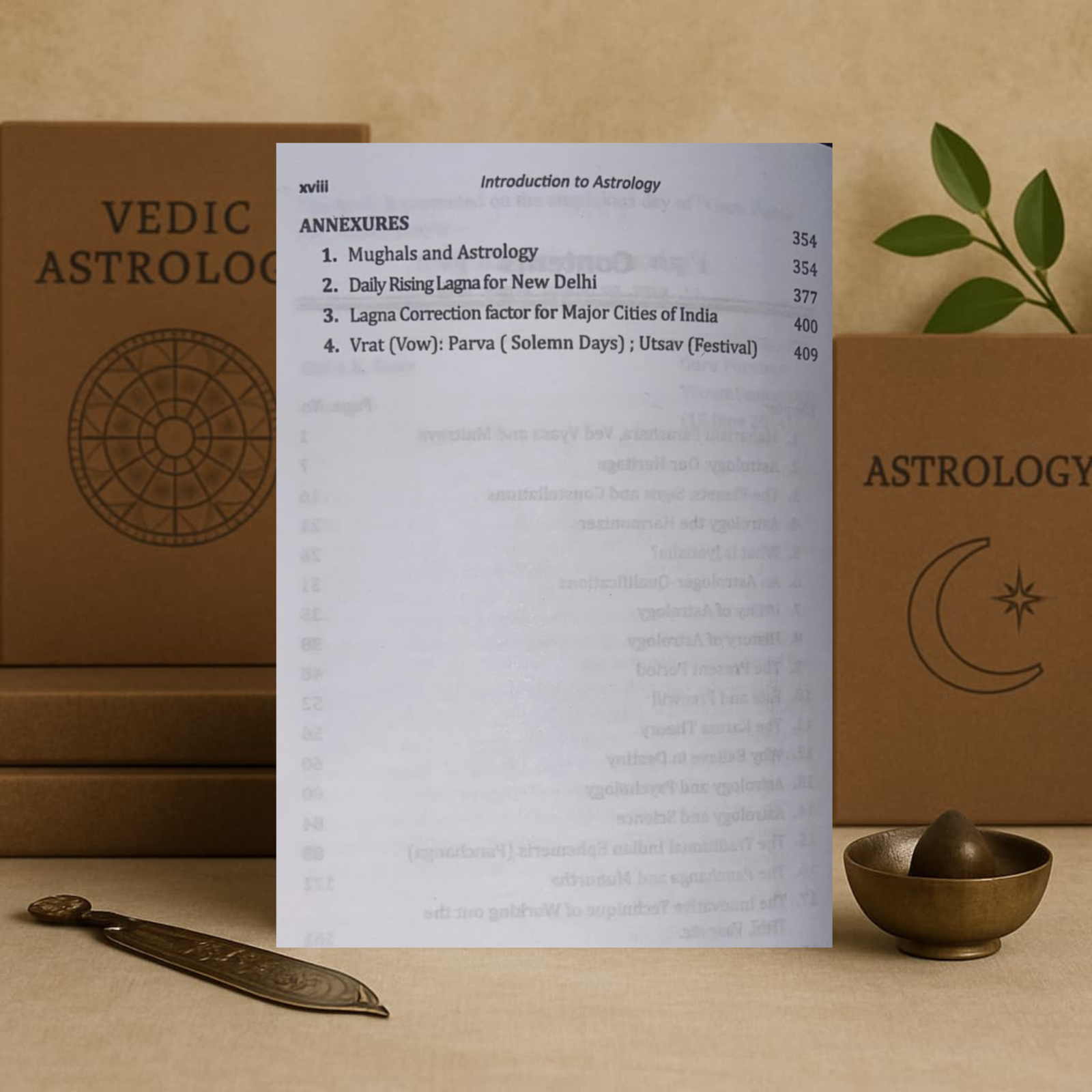
- Reference Tables for Horoscope Calculation
These subjects provide readers with a solid conceptual and practical foundation before progressing to advanced predictive astrology.
About the Authors
Col. A.K. Gour was a respected scholar and teacher of Vedic Astrology known for presenting traditional Jyotisha in a systematic and educational manner. Together with Dr. Uday Kant Misra, he developed this book as an introductory guide that combines classical principles with practical learning. Their work is appreciated for its clarity, structured presentation, and emphasis on authentic Jyotisha fundamentals.
Who Should Read This Book?
This book is ideal for:
- Beginners in Vedic Astrology
- Students of Jyotisha
- ICAS Examination Aspirants
- Astrology Teachers
- Horoscope Casting Learners
- Panchanga Students
- Astrology Researchers
- Practicing Astrologers seeking stronger fundamentals
- Readers interested in Indian Knowledge Systems
Why Buy This Book?
If you are looking for a complete beginner’s guide to authentic Vedic Astrology, Introduction to Astrology (Ganita Hora Samhita) is one of the finest books available. Instead of focusing only on predictions, it explains the scientific, mathematical, philosophical, and historical foundations of Jyotisha. Its logical presentation, academic approach, and balanced coverage of Ganita, Hora, and Samhita make it an excellent textbook for self-study, classroom learning, and long-term reference.


Reviews
There are no reviews yet.