
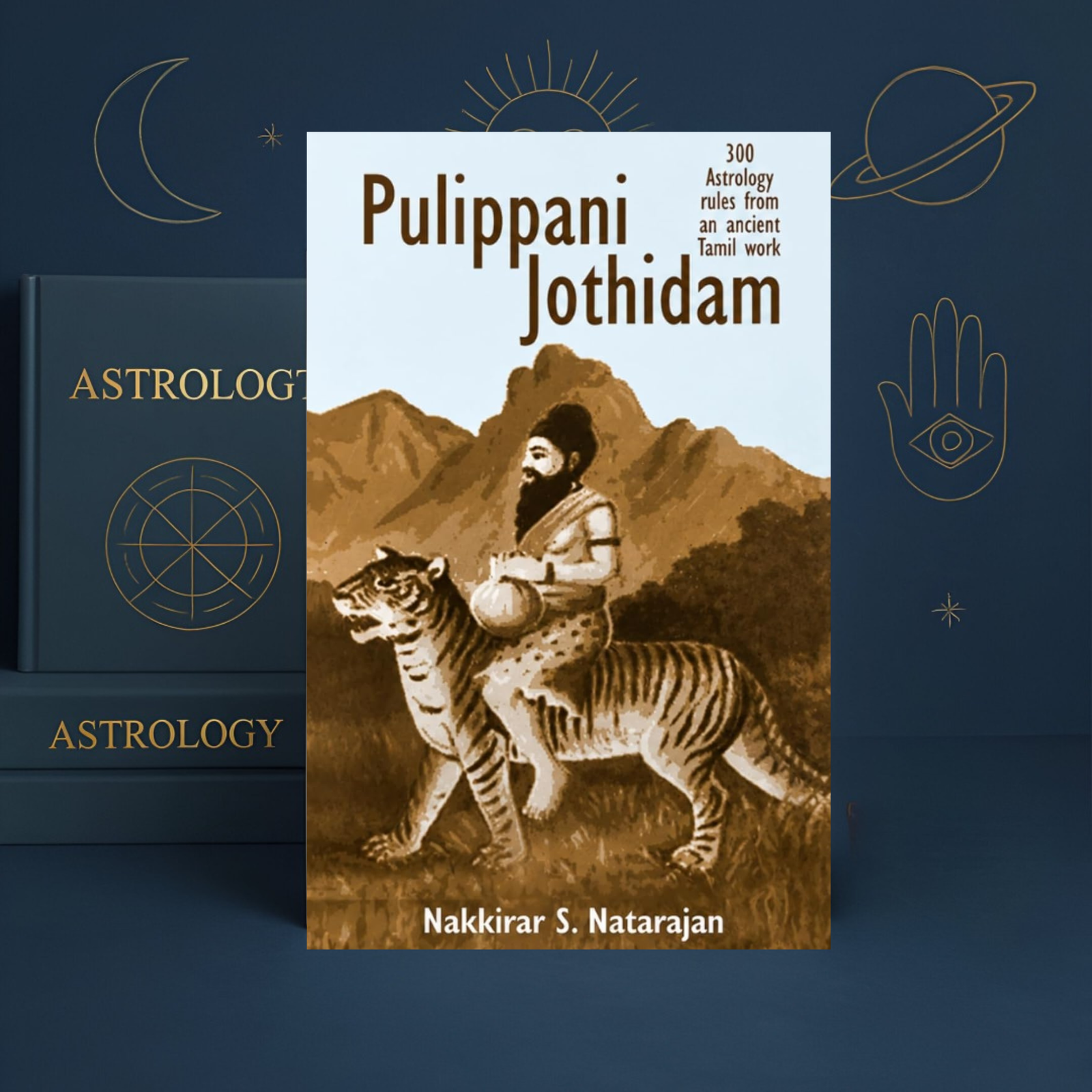
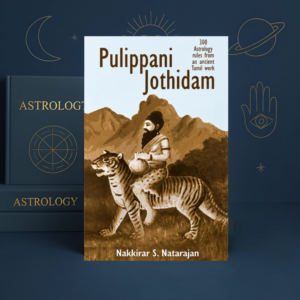
Pulippani Jothidam by Nakkirar S. Natarajan is a specialized English edition of a classical Tamil Astrology work presenting 300 concise astrological rules and verses. Published by Saptarishis Publications, the book brings traditional Tamil Jyotish principles into an accessible English-translated format and covers a wide range of subjects related to horoscope interpretation and predictive astrology.
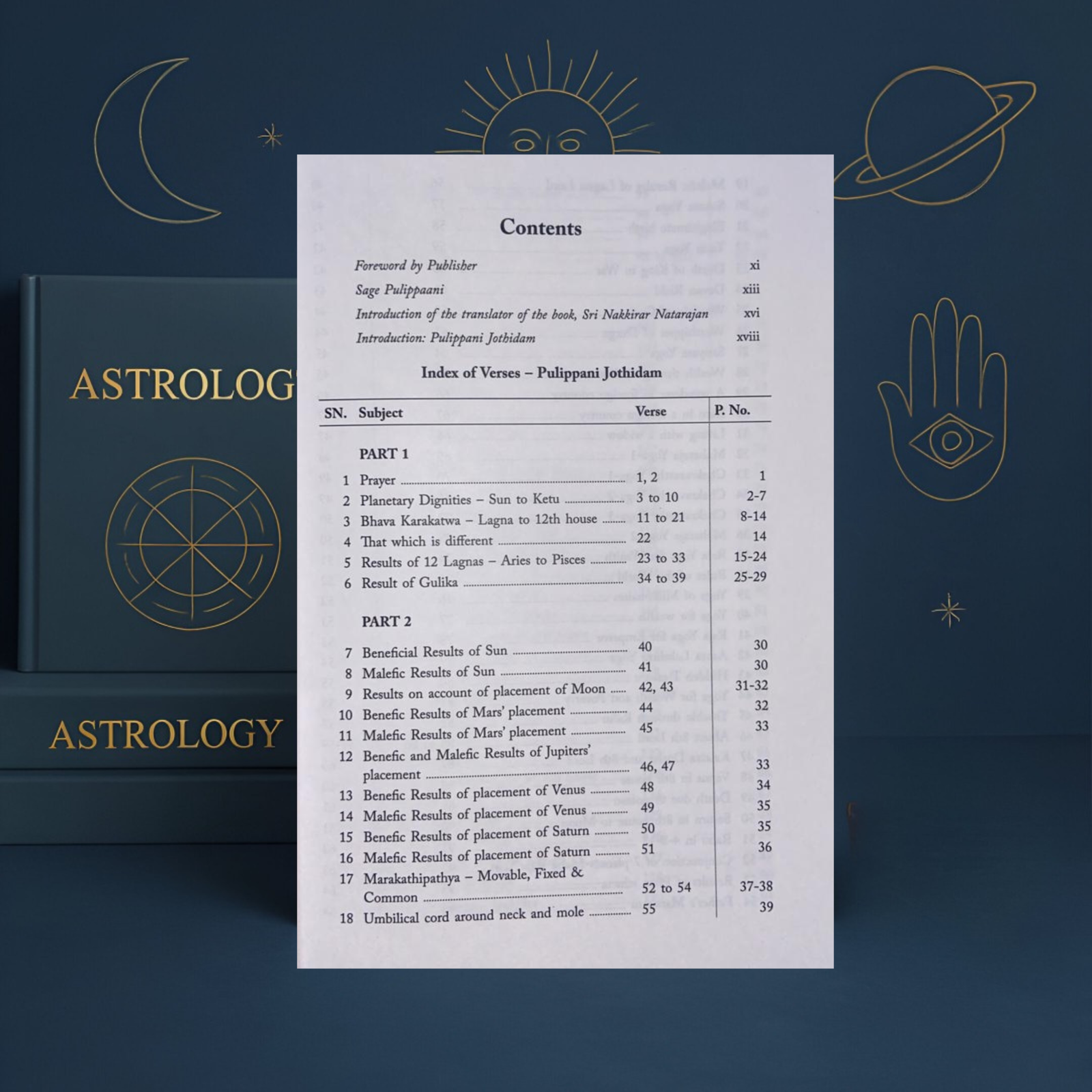
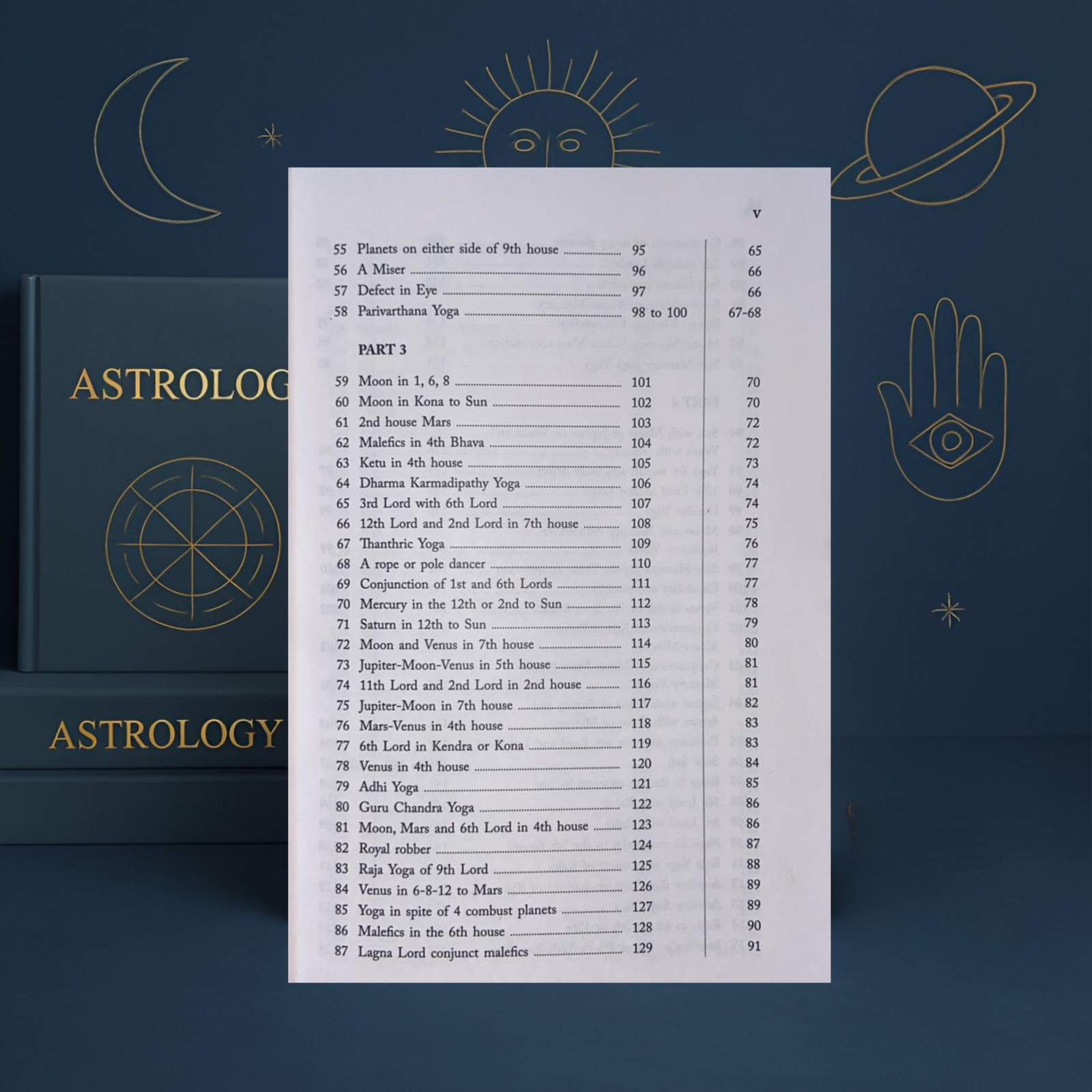
The distinctive feature of Pulippani Jothidam is its concise presentation. A large body of astrological knowledge is organized into 300 verses, allowing readers to study important predictive principles in a compact reference format. The work includes planetary results, Bhava Karakatwa, Lagna analysis, planetary combinations, Yogas, transits and Dasha results.
300 Astrology Rules
The book is built around 300 traditional astrology rules presented in verse form. These concise rules cover a broad range of horoscope factors and provide a focused study of classical predictive principles.
For astrology students, this format can be useful for learning individual rules, reviewing them quickly and then applying them to horoscope analysis.
The material includes principles dealing with:
• Planets and their dignities
• Houses and Bhava Karakatwa
• Ascendants and Lagna results
• Planetary placements
• Planetary conjunctions
• Raja Yogas
• Dhana Yogas
• Duryogas
• Gulika
• Planetary transits
• Mahadasha and Antardasha
• Rahu and Ketu aspects
• Benefic and malefic planetary results
Classical Tamil Astrology
Pulippani Jothidam represents an important stream of traditional Tamil astrological literature. The present edition makes selected traditional material available to English-speaking readers while retaining the connection with the original Tamil astrological tradition.
This makes the book particularly relevant to readers interested in regional Indian astrology and classical Jyotish literature.
Planetary Dignities
The opening portion of the book discusses planetary dignities from the Sun through Ketu. Understanding the traditional strength, condition and nature of planets forms an important foundation for interpreting their results in a birth chart.
Students can use these principles while studying how the same planet may produce different results depending on its position and condition.
Bhava Karakatwa
Bhava Karakatwa is another major subject. The book discusses the significations of the houses from Lagna onward and provides a framework for understanding what different Bhavas represent in a horoscope.
This is useful for readers who want to strengthen their understanding of house-based horoscope analysis.
Results of the Twelve Lagnas
The work includes traditional results associated with the twelve Ascendants from Aries to Pisces.
This provides readers with a systematic way to study how the basic Lagna influences the overall structure of the horoscope and the interpretation of other planetary placements.
Gulika Astrology
Gulika is given a dedicated treatment in the book. Traditional results associated with Gulika and its placement are included among the predictive rules.
For students of specialized Jyotish techniques, this provides an additional area of study beyond the major planets.
Planetary Placements
The book provides rules for interpreting planetary placements and distinguishes between beneficial and challenging results associated with different planetary positions.
The treatment covers planets such as:
• Sun
• Moon
• Mars
• Mercury
• Jupiter
• Venus
• Saturn
• Rahu
• Ketu
Readers can use the rules as a reference while studying planetary influence in a birth chart.
Benefic and Malefic Results
The book includes separate treatment of benefic and malefic planetary results. This allows students to compare how planetary placements may traditionally be interpreted under different circumstances.
Such comparative study can help readers understand that planetary interpretation is based on context rather than on a single fixed meaning.
Planetary Conjunctions
A substantial part of the material deals with combinations and conjunctions of planets. These combinations are presented through concise rules describing the traditional results associated with them.
This makes the book useful for students interested in planetary combination astrology and predictive horoscope interpretation.
Raja Yoga
Raja Yoga is one of the important subjects included in Pulippani Jothidam. The book presents traditional combinations associated with rise, achievement and favourable circumstances.
Readers interested in Yoga-based horoscope analysis can use these rules as a reference while studying planetary and house relationships.
Dhana Yoga
The book contains a significant collection of Dhana Yoga combinations. These are traditionally interpreted in connection with wealth, financial circumstances and material resources.
The concise rules provide students with a specialized collection of Dhana Yoga principles within the broader framework of classical Tamil Astrology.
Duryoga
The work also includes challenging or adverse combinations traditionally classified as Duryogas.
Studying both favourable and unfavourable combinations allows readers to develop a more balanced understanding of classical predictive principles.
Transits and Predictive Astrology
Planetary transits form another important section of the book. Traditional transit results are presented as part of the predictive framework.
Students of Predictive Astrology can explore how planetary movement is interpreted in relation to natal chart factors and how transit indications can be added to broader horoscope analysis.
Mahadasha and Antardasha
The final sections include results associated with Mahadasha and Antardasha periods.
Dasha Astrology is traditionally used to study the timing and unfolding of planetary influences. The inclusion of Mahadasha and Antardasha principles makes this book useful for readers interested in timing-related horoscope interpretation.
Rahu and Ketu Aspects
One distinctive feature of the work is its discussion of Rahu and Ketu aspects. While different traditions discuss their aspects in different ways, Pulippani Jothidam includes specific observations regarding their third and eleventh aspects.
This makes the book particularly interesting for students researching less commonly emphasized planetary-aspect principles.
Practical Reference for Horoscope Analysis
Although the book is concise, the rules can be used as a reference while analysing a horoscope.
A student can identify a planetary placement or combination, locate the corresponding principle and then compare it with the broader chart context.
This makes the book suitable for repeated consultation during astrology study.
Compact Classical Wisdom
The defining characteristic of Pulippani Jothidam is the amount of information presented in a relatively concise structure.
The 300 rules cover a broad spectrum of traditional astrology, including:
• Planetary significations
• Houses and Bhavas
• Ascendants
• Gulika
• Planetary combinations
• Yogas
• Wealth combinations
• Difficult combinations
• Transits
• Dashas
• Rahu-Ketu principles
This compact format can make the book valuable as a quick-reference astrology text.
Tamil Text with English Translation
The edition preserves the connection with the original Tamil material while making the contents accessible through English translation.
This is particularly useful for readers interested in exploring traditional Tamil astrology without needing to read the complete source material in Tamil.
Research-Oriented Study
For astrology researchers, the book provides numerous concise rules that can be individually studied and compared with horoscope examples.
Readers can use the principles as material for further observation, documentation and comparative research across different charts.
Key Areas Covered
• 300 Astrology Rules
• Classical Tamil Astrology
• English Translation
• Planetary Dignities
• Bhava Karakatwa
• Twelve Lagnas
• Gulika
• Planetary Placements
• Benefic and Malefic Results
• Planetary Conjunctions
• Raja Yoga
• Dhana Yoga
• Duryoga
• Planetary Transits
• Mahadasha
• Antardasha
• Rahu and Ketu Aspects
• Predictive Horoscope Analysis
• Classical Jyotish Principles
• Practical Astrology Reference
Who Can Read This Book?
Pulippani Jothidam can be useful for:
• Students of Vedic Astrology
• Tamil Astrology learners
• Predictive Astrology students
• Jyotish practitioners
• Astrology researchers
• Students studying planetary combinations
• Readers interested in Raja Yoga and Dhana Yoga
• Students exploring Dasha and Transit Astrology
• Readers interested in classical Indian astrology texts
It can be particularly useful for readers who prefer concise rules that can be studied individually and then applied to horoscope analysis.
Practical Applications
The principles in the book can traditionally be studied for areas such as:
• Horoscope interpretation
• Planetary strength and dignity
• House analysis
• Wealth combinations
• Raja Yoga combinations
• Difficult planetary combinations
• Transit interpretation
• Dasha-based analysis
• Rahu-Ketu interpretation
• General predictive astrology
The book can therefore function both as a classical reading text and as a practical consultation reference for students of Jyotish.
About the Author and Translator
Nakkirar S. Natarajan is associated with the English presentation and translation of Pulippani Jothidam. His work helps bring traditional Tamil astrological material into a format accessible to English-speaking students and researchers of Astrology.
Book Details
Title: Pulippani Jothidam
Subtitle: 300 Astrology Rules from an Ancient Tamil Work
Author/Translator: Nakkirar S. Natarajan
Publisher: Saptarishis Publications
Language: Tamil Text with English Translation
Pulippani Jothidam is a specialized reference for readers interested in Tamil Astrology, Vedic Astrology, 300 Astrology Rules, Planetary Combinations, Raja Yoga, Dhana Yoga, Dasha Astrology and Transit Astrology. Its concise verse-based structure brings together a wide range of classical predictive principles in a compact format.





Reviews
There are no reviews yet.