
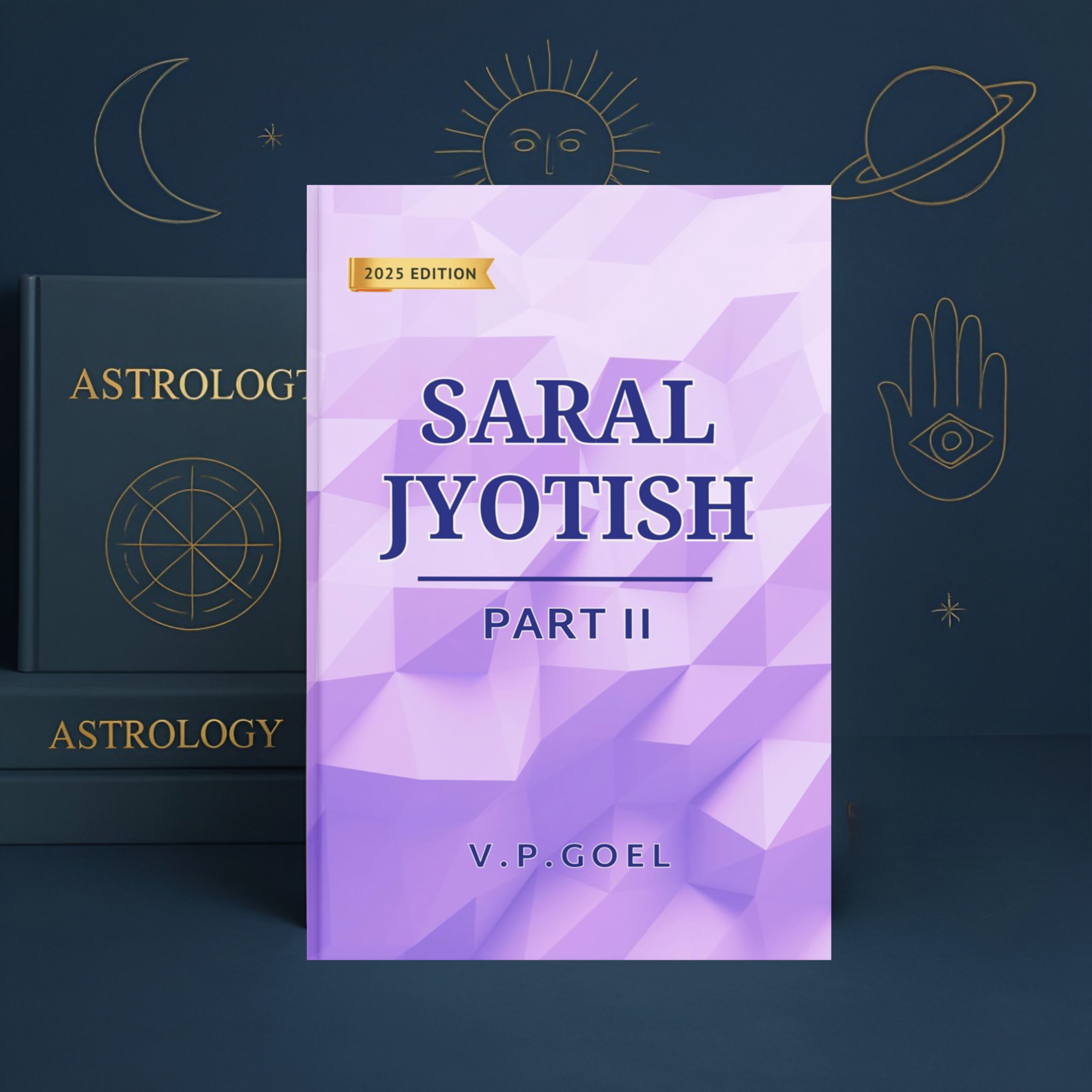
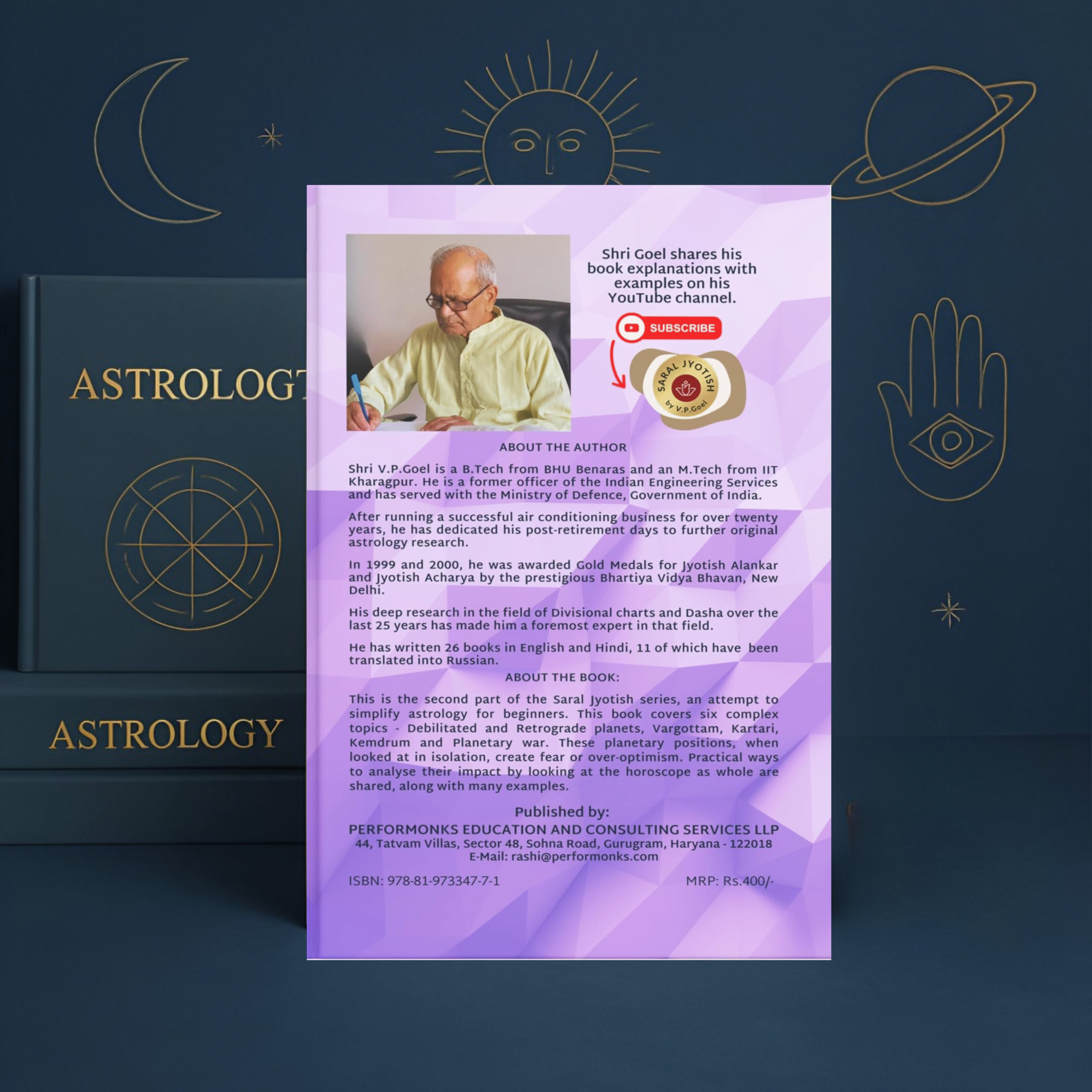
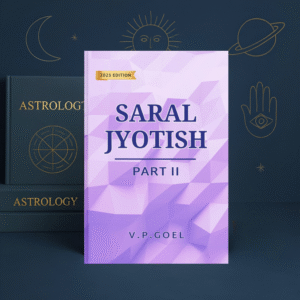
Saral Jyotish Part 2 (English) by V. P. Goel, published by Performonks Education & Consulting Services LLP, continues the foundational journey started in Part 1.
This revised 2024 edition has been updated for clarity, practical application, and modern learners.
The book focuses on simplifying principles of predictive astrology, enabling readers to interpret horoscopes confidently and systematically. V. P. Goel is known for his concise teaching style, making even complex astrological concepts easy to understand.
✨ Why This Book Is Important
✔ Breaks down difficult astrological principles into easy explanations
✔ Ideal for anyone who wants structured learning from basics to application
✔ Includes practical examples for real-life horoscope analysis
✔ Written by senior astrologer V. P. Goel, known for simplified teaching
✔ Revised 2024 edition ensures improved clarity and updated examples
✔ A perfect continuation after reading Saral Jyotish – Part 1
📚 What You Will Learn in This Book
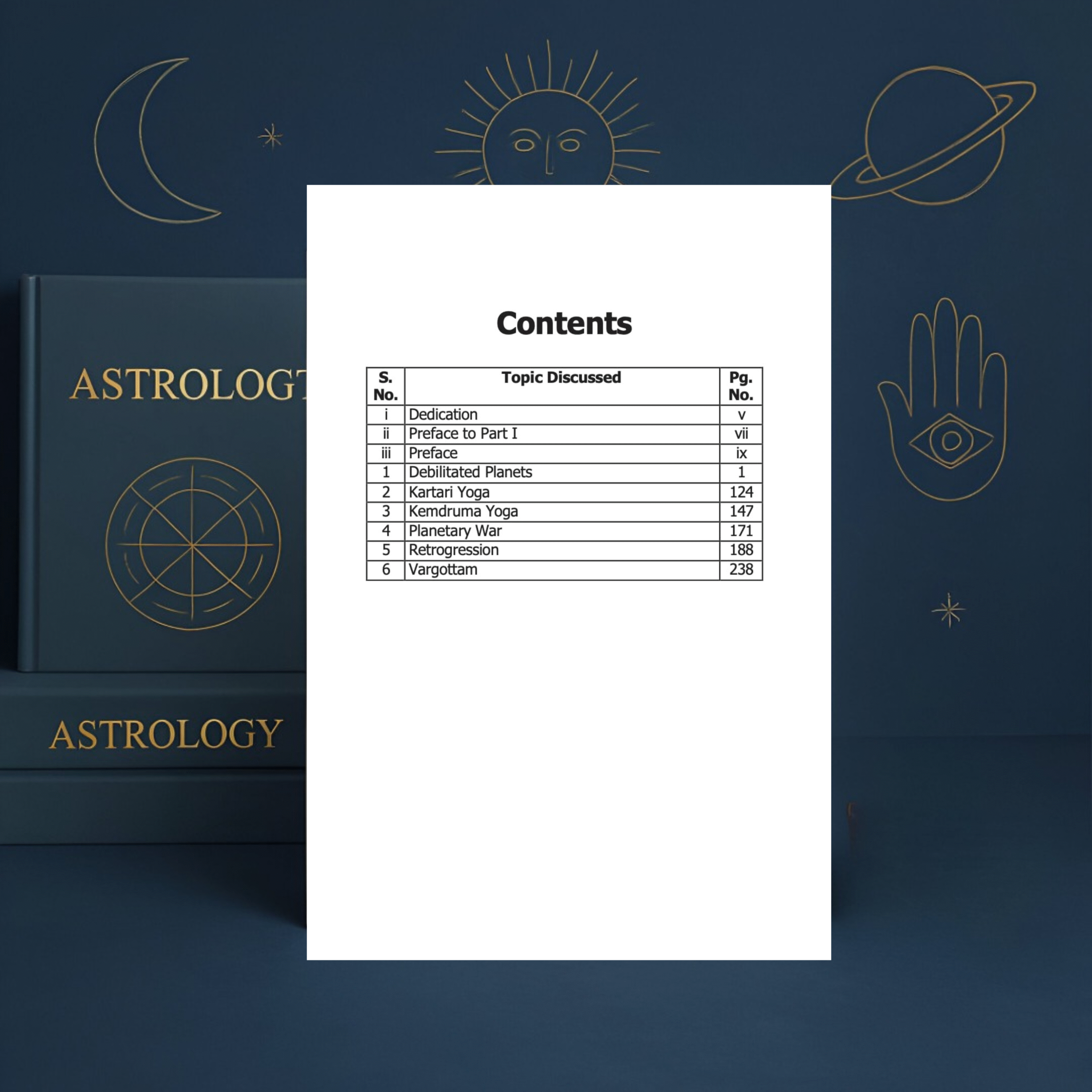
This book covers key predictive astrology topics including:
Principles of house analysis
Effects of planets in various houses
Aspect interpretation (Graha Drishti)
Rules for functional benefics & malefics
Lagna-specific guidelines
Use of Nakshatras in interpretation
Understanding strength & weakness of planets
Practical methods to assess events in a native’s life
Simple frameworks to predict:
Marriage
Career
Education
Health
Finance
Each chapter is written in simple English with examples to help readers understand quickly.
🎯 Who Should Read This Book?
✔ Astrology students (Beginner to Intermediate)
✔ Vedic astrology enthusiasts
✔ Practicing astrologers wanting structured basics
✔ Anyone seeking a simplified approach to horoscope reading
✔ Readers who already studied Saral Jyotish Part 1
❓ FAQs
1. Is Saral Jyotish Part 2 good for beginners?
Yes. The book is written in simple language so even beginners can follow the principles easily.
2. Is this edition updated?
Yes, this is the Revised 2024 Edition with improved explanations and examples.
3. Do I need to read Part 1 before this?
Recommended but not mandatory. Part 2 builds on the conceptual foundation laid in Part 1.
4. Is the book suitable for self-study?
Absolutely. It is structured for easy and independent learning.
5. Which language is this book in?
This is the English edition, in paperback format.
Reviews
There are no reviews yet.